🌸 Plum Blossom
The Plum Blossom, known scientifically as Prunus mume, is a well-loved flowering plant hailing from East Asia. Revered for its delicate beauty and subtle fragrance, the Plum Blossom holds a special place in the hearts of many. Its blossoms are one of the first to appear in late winter, providing a harbinger of the warmer days of spring. Aside from its aesthetic appeal, the Plum Blossom also carries significant symbolic and cultural value, particularly in China and Japan.
🌼 Botanical Overview
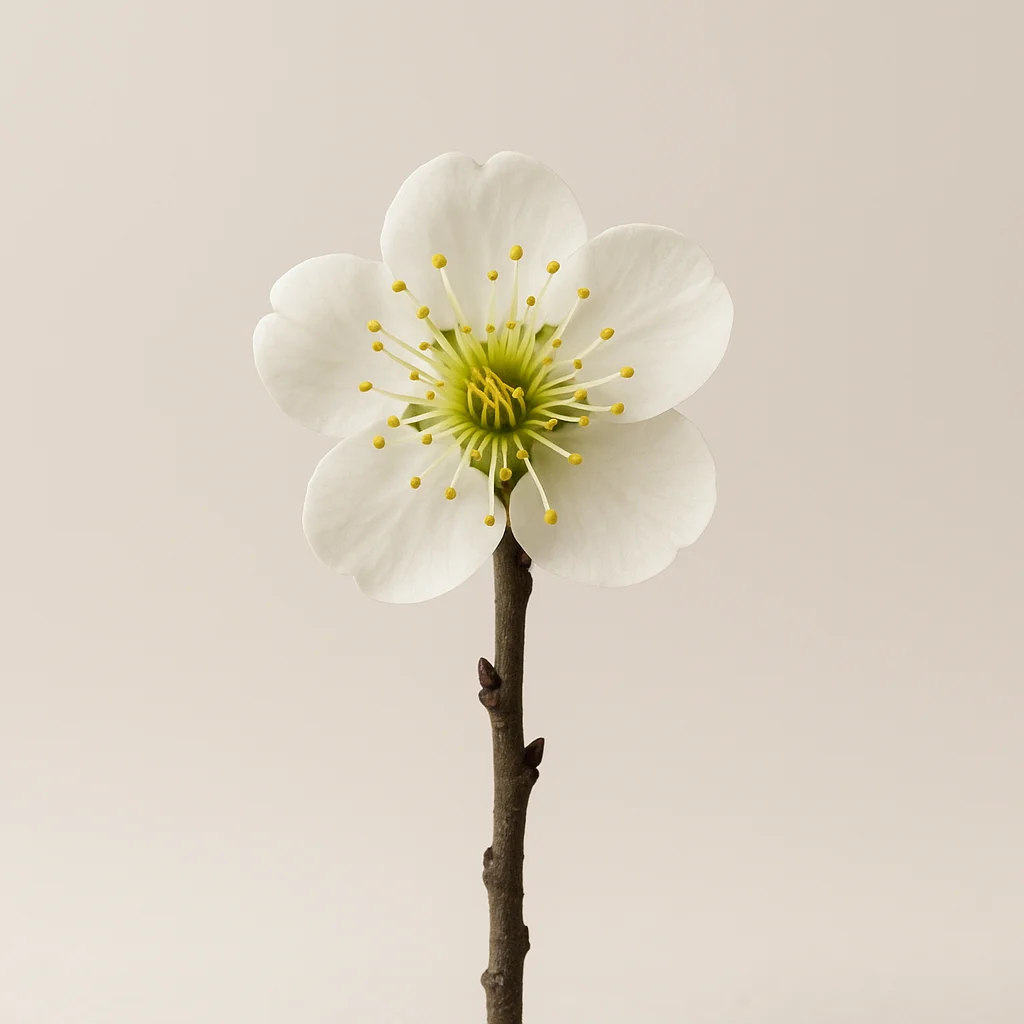
The Plum Blossom, a member of the Rosaceae family, is a deciduous tree or shrub. It can grow up to 4–10 meters in height, featuring a gnarled and twisting trunk that gives each tree a unique appearance. Its flowers, typically around 2-3 centimeters in diameter, boast five petals that range in color from white to pink and even red. Accompanying the flowers are an array of lanceolate leaves that emerge shortly after blooming. When describing these flowers in images, it is essential to show the complete bloom, ensuring every petal, stem, and leaf is in full view.
🌍 Origin & Natural Habitat
Plum Blossoms are native to southern China and have been cultivated for over 3,000 years. They have also established their presence in Korea and Japan, where they are deeply integrated into the cultural fabric. Typically found on mountainsides and forest margins, these trees thrive in regions with cold winters and moderate summers. The plant's ability to blossom in winter makes it a symbol of resilience and perseverance.
📅 Blooming Season
One of the most charming attributes of the Plum Blossom is its early blooming period. Flowering from late January to early March, it graces the end of winter with its radiant blossoms before virtually any other species in its environment. This early blooming season not only symbolizes the transition from winter to spring but also gives the Plum Blossom its esteemed status in festivals and celebrations.
🌱 Growing & Care Tips
For those looking to cultivate Plum Blossoms, several factors should be considered to ensure the plant thrives:
- Location: Plant the tree in a location receiving full sunlight to partial shade for optimal growth.
- Soil: Well-draining soil with moderate fertility is ideal. Amend with organic matter if necessary.
- Watering: While young, maintain soil moisture with regular watering. Established trees require less frequent irrigation.
- Fertilization: Apply a balanced fertilizer in early spring to encourage healthy flowering and growth.
- Pests & Diseases: Monitor for aphids and caterpillars. Fungicidal treatments may be required for fungal infections like powdery mildew.
A complete image of the plant, from root to blossom, showcases the full beauty and structure of the Plum Blossom.
✂️ Pruning & Maintenance
Regular pruning is vital to maintain the shape and health of a Plum Blossom. Pruning should be done in late winter before new growth begins, focusing on removing dead or diseased branches. Thin out crowded areas to improve air circulation and light penetration, enhancing the overall vigor of the tree. The goal is to capture the entire structure of the tree, including every stem and branch, within the composition of any imagery.
🌺 Symbolism & Cultural Meaning
Throughout East Asia, the Plum Blossom is a symbol of resilience, perseverance, and hope. In China, the flower represents one of the "Three Friends of Winter" along with pine and bamboo, symbolizing fortitude against the chilling season. In Japan, they are associated with spring and are celebrated during the "Ume Matsuri" or Plum Festivals. The plum’s ability to bloom amidst frost underscores a message of hope and regeneration, marking the defiance of beauty against adversity.
💐 Popular Uses & Arrangements
The Plum Blossom is popular in floral arrangements for its grace and simplicity. The structure of its blooms makes it ideal for traditional Ikebana, focusing on the harmonious balance of lines and space. These blossoms are also favored in bonsai culture, where the complete bloom and stem are critical in capturing the essence and style of the miniature tree. When presenting images, it's important to frame the entire flower arrangement, ensuring the viewer can appreciate the full artistry.
⚠️ Safety, Toxicity & Precautions
While the Plum Blossom tree itself isn't highly toxic, the seeds within the fruit contain amygdalin, which can convert to hydrogen cyanide when ingested in large quantities. Therefore, it is important to exercise caution with children and pets. Always ensure that ornamental and cut branches are placed safely away from reach. It is always safer to depict the plant as a whole to reinforce its identity and reduce potential misunderstandings regarding its use.
📌 Summary
The Plum Blossom is not just a beautiful winter spectacle; it embodies a wealth of cultural and symbolic meaning. From its early bloom that defies the cold to its historical roots in Asian culture, it is a cherished symbol of perseverance and hope. Cultivating this tree requires care in terms of sunlight, soil, water, and pruning, while respecting its natural beauty through complete and unobstructed representation in images and arrangements. With an understanding of its symbolism and care needs, the Plum Blossom can be a rewarding addition to gardens and cultural celebrations worldwide.